For this project, I was required to commit to a topic and learn as much as I could about it. I opted to practice Pranayama daily for a month and journal about my experience. Although I won’t be typing out my entries here I will give you some tidbits from my personal experience with different breath work practices.
As part of my preparation I read several books on the topic: BKS Iyegar’s ‘Light on Pranayama’, James Nestor’s ‘Breath’, Andrew Smart & Eric Nyquist’s ‘Breathwork’, and Nathalia Westmacott-Brown’s ‘Breathwork’.
My favourite being Breath by James Nestor. I posted a tiny bit about in on my instagram account in February and wouldn't shut up about the book to anyone willing to listen. Possibly one of the most interesting facts from the book is that our noses have erectile tissue in them that gets engorged when sexually stimulated; aka the inside of your nose gets an erection!
He goes over such interesting studies including carbon dioxide therapy. The benefits are extraordinary and basically it’s a fast-tract to experiencing the positive side effects of hypoventilation without having to spend tons of time training your lungs to breath-hold for 30 second stretches of time. This therapy can significantly reduce depression and anxiety levels.
In the book, Mr. Nestor also notes that the optimal regular breathing pattern is a 5.5 second inhale followed by a 5.5 second exhale on continuous repeat.
These were the main takeaways from this book:
Breathe through your nose – shut your mouth!
Less is more – breathe just breathe less
Chew
Exhale
Breathe more on occasion
Hold your breath!
How we breathe matters
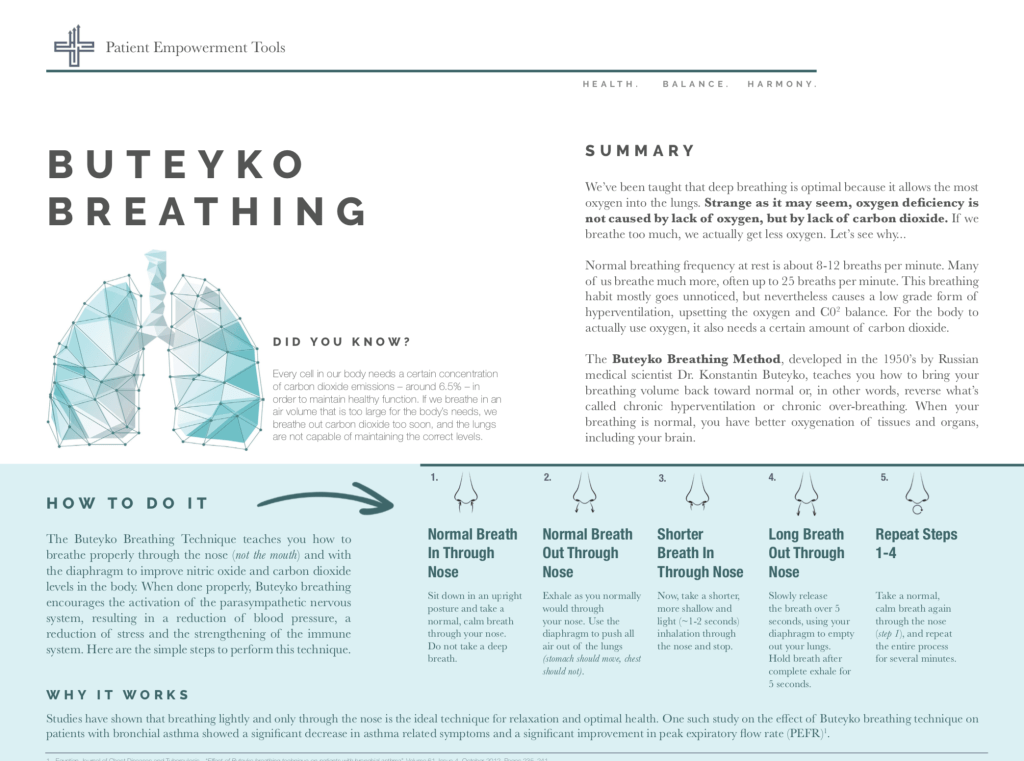
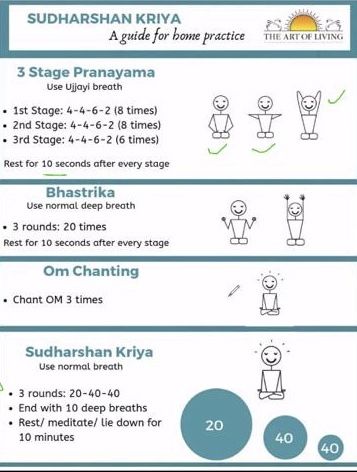
He explains several different breathing practices including: Nadi Shodhana (Alternate Nostril Breathing), breathing coordination, resonant (coherent) breathing, Buteyko breathing (hypoventilation), Tummo (the Wim Hof method), and Sudarshan Kriya.
I had never thought about breathing so much as when I started researching and really diving deep into the breath. It was so fascinating to me to learn how powerful of a force the breath really is and what a profound effect it has on your overall health and well-being. I’m totally hooked and want to keep exploring. I’m currently reading James Nestor’s ‘Deep’ all about free-diving which is also phenomenal.
Buteyko breathing brought my mind back to my swimming days when I would take a tiny sip of air then take 2-3x my typical stroke count and would continue in that pattern for several lengths. We also used to 'train our lungs' by swimming entire lengths of the pool underwater. I used to be able to swim almost 40 meters underwater on a single breath. There's something familiar and comforting in practicing this breath work even though at times it feels like I'm suffocating or that my lungs might explode. There's a sense of coming back to my roots and it has been the type of breath work that has caught my attention the most.
I explored how to use resonant breathing to achieve a flow state in January with Wanderlust's free 21 day yoga challenge. We were taught resonant breathing on day one and then practiced it throughout the 21 days that followed. It was really calming yet energizing. Wanderlust's Schuyler Grant paired the resonant breathing with specific music that helped to maintain that breath pattern through the practice. If you ever get a chance to do a resonant breathing challenge I would highly recommend it.
I have practiced Nadi Shodhana and was familiar already with alternate nostril breathing but I did find it sometimes made my head feel funny after practicing for several minutes. This is meant to be calming and typically is as it forces you to breath less and slower.
On August 13 I attended a virtual workshop on Sudarshan Kriya through the Art of Living foundation. I honestly found it to be a waste of time and a money grab which is really unfortunate. They only went through Bhastrika and a short meditation. They didn't do the 3 stage pranayama, Om chanting or Sudharshan kriya which is what I was expecting them to offer. At the end they sent me into a break off room with an employee or volunteer who tried getting me to sign up for a weekend workshop. She was so pushy it was really uncomfortable and I was not prepared for this. I honestly wish I had just searched Sudharshan Kriya on YouTube. I will say that Bhastrika breathing is really energizing and grounding. I had practiced it during a meditation class I attended in past and it was really enjoyable.
Tummo is next on my list to try, I have a few friends who want to practice this method while in a cold plunge bath. I am tempted but don’t want to run the risk of passing out and subsequently drowning since I don’t own a plunge tub. Check out this video to learn a little bit more on the topic.
I initially began reading this book. BKS Iyengar is a legend in the yoga world and is highly respected as a knowledgeable authority. That being said, I couldn't for the life of me get into this book. I found all the scientific jargon confusing. It definitely is an informative book and I am glad that I read it. It just wasn't my favourite for the fact that it wasn't simple enough to read. I occasionally tried some breathing exercises from here but preferred to use other resources that I found easier to digest.
I am really enjoying this book as a quick directory where I can look up exactly what symptom or situation I'm experiencing and get a tailored breath work exercise to use in that moment. It's simple and to the point. If you're looking for practical breathing exercises broken down in steps this is the book for you. I also appreciate the beautiful drawn images throughout.
This book outlines the steps for things like Holotropic Breathwork, Zen, Pranayama (Box breathing, alternate nostril breathing, lion breath), three-part-breath, Wim Hof Method, Kundalini and running breath. It is sorted based on technique but the initial page for each technique explains when it's useful to practice and who needs it as well as a quick summary of what it is. I really enjoy this as a reference book. It's a lot more text than the other breathwork book listed above.
Honestly, I feel like I have just barely touched the tip of the iceberg. I think I would like to do more guided breath work courses in the future. It is absolutely remarkable how impactful the breath truly is on your body and mind. I’ve noticed more calm, clarity, productivity and more distance between stimulus and response over the course of this month. I’m excited to see what other benefits come from this daily pranayama practice.
I’m curious to hear, what are your favourite resources related to pranayama?
Modern yoga is constantly evolving. It is wonderful to witness growth and change, and it also brings up complex, multi-faceted issues for us to navigate as yoga teachers.
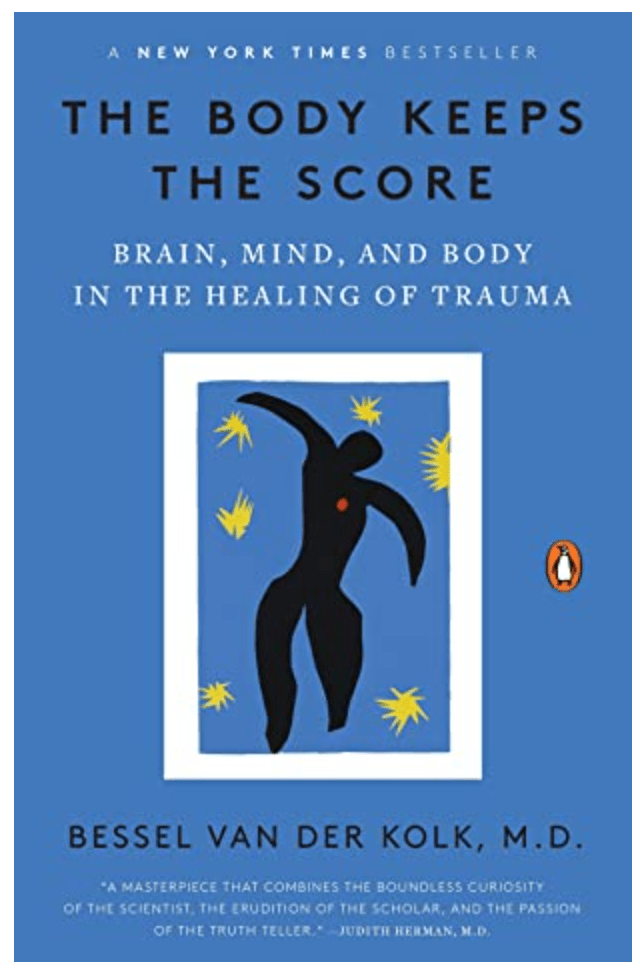
This month I decided to focus on trauma-informed yoga and I read the book “The Body Keeps the Score” by Dr. Bessel Van Der Kolk as part of my learning.
First off, wow. If you have never heard of this book, it is definitely a challenging read. I do feel that despite being a book about trauma it should really come with a trigger warning. Childhood sexual assault and other forms of abuse are depicted throughout sometimes in graphic detail. It is important to note that these anecdotes are relevant and necessary. Use discretion on whether or not you are ready to dive into this book. I personally needed to take breaks while reading. I found the parts on veterans to be okay and I read 100 pages in a couple of hours but when it started getting heavy into rape I needed to step back. I only read small chunks at a time and took an additional week to read the remaining 260 pages.
A huge take away for me is that we need to really honour where people are at in our classes. Being mindful to recognize that some people may be starting at a place where they cannot feel anything and thus could greatly benefit from body awareness and tuning into physical sensations as they come up in poses; whereas, other people might be hyper-aware of their body and may get easily hijaked by their sensations and emotions so it’s important to provide an anchor as well as safe alternatives (for instance ‘Happy baby’ pose can be really triggering for someone who was molested as the pelvis is quite open so maybe a simple reminder that closed leg child pose is always available). Being sensitive to each persons’ needs and reminding people to go at their own pace and to pay attention to where they are at today versus making students feel like they have to do exactly what you cue. Developing a sense of safety is vital. Many people with trauma histories may not feel safe anywhere, and so allowing them to discover the safety in their own body can have profound effects on their overall well-being.
The book explained how, for PTSD, yoga is often more effective at diminishing symptoms and increasing quality of life than medications. But throughout, Van der Kolk really focuses on “too much too fast” and how when you push too far too soon you wind up losing the person. It really sounds to me like each yoga practitioner should be trained in a trauma specific modality for yoga instruction as there is a significant need for trauma-informed practitioners.
I can see the implications this has on my elementary classroom as well as on my yoga students. Teaching people how to feel their emotions and learn how to respond rather than react, learn what it is that they need in that moment and how they are a safe person to deliver what they need to themselves is so incredibly powerful and transformative.
The studios I practice at either don’t use any touch or they use consent chips where you get to state whether or not you would like to have manual adjustments by your instructor. I believe that is one step in the right direction. I don’t believe that many yoga programs have enough focus on trauma specific practice. And, given the percentage of individuals in North America living with trauma histories, this seems grossly negligent.
Did your training program offer trauma sensitive instruction?
Does yourstudio adopt practices that are trauma-informed?
What are your thoughts on the yoga community’s role in furthering trauma or in healing trauma?
For my ‘Be Healthy” pillar project I opted to look into prenatal yoga and how the Modo yoga 60 minute sequence could be adapted for each trimester. I chose this topic as I have personally experienced the benefits of prenatal yoga during both of my pregnancies. In experiencing the changes of pregnancy, childbirth and postpartum, I have come to a newfound appreciation for yoga and its benefits throughout the lifecycle. I also have a mini-personal-passion for anything related to pregnancy and postpartum because the female reproductive system is legit a phenomenon.
Before I begin I just want to give a piece of advice- Please NEVER assume that someone is pregnant no matter how obvious it might appear to you. And really reflect before commenting on anyone’s body.
I would like to do my best to be mindful when teaching to include cautions for pregnancy/early postpartum. Oftentimes, people do not like to disclose their pregnancy within the first trimester and yet already that early they may need to be making adjustments. I think cuing towards using stability and muscular strength versus momentum is a great general note that would allow for safety in poses without jeopardizing students’ privacy and without making the assumption that someone is pregnant (which side note is NEVER okay to do).
I would absolutely love to teach prenatal specific yoga classes to really get to honour this monumental period of change in my students’ lives. I had the privilege of guiding a good friend of mine through a 60 minute yoga class almost weekly for the last three months of her pregnancy. There is just something so incredible in being able to support a friend through a new life stage. I loved being able to cue modifications for two separate trimesters and to see how her practice evolved as her little bub grew.
I hope to promote a healthy body and mind to my students by encouraging a consistent prenatal yoga practice alongside aerobic exercise such as swimming or aquafitness which offers the cardiovascular benefits necessary during pregnancy without any additional strain to the joints and skeletal structures. I think yoga offers a unique opportunity to learn a lot about yourself, to strengthen your body and your mind. To learn distress tolerance and to promote positive self-soothing techniques such as breathing exercises.
According to a 2019 study, the top reasons people start and maintain a yoga practice are relaxation and health promotion. Prenatal people especially need stress reduction and a boost to their health so they report similar reasons for beginning a practice. Most people will begin their prenatal yoga journey during their second trimester when they often feel very good and can do just about anything they feel comfortable doing, with or without props, as long as they can breathe deeply.
A prenatal person may be feeling tired, isolated or lacking community, overwhelmed by the changes in life and body, frequent mood changes, anxious about birth or fearful around how to care for a newborn, might have aches and pains. May have body image issues, forgetfulness or perinatal mood and anxiety disorders.
Some benefits of prenatal yoga include: -improved sleep and reduced fatigue -reduced stress and anxiety -increased strength -flexibility and endurance of muscles needed for childbirth -decreased lower back pain, nausea, headaches and shortness of breath – improved mood -community -helps the prenatal person bond with their baby -reduced risk of preterm labour and other complications (which is really cool so high stress levels have been shown to increase miscarriage and preterm birth rates- women who practice asana, meditation or pranyama for an hour a day lower their risks and in a 2018 study in the Journal of Alternative and Complimentary Medicine by Bolanthakodi et al. those who practiced yoga were less likely to be induced, they had a higher vaginal birth rate, reduced c-section rate, shorter first stage of labour and better tolerance of pain, there were also significantly less low birth weight babies.)
Some notable physical changes that occur in the pregnant body include: –> increased relaxin which is a hormone that softens the connective tissue to loosen muscles and joints- this allows the pelvic joints to become more flexible but can lead to instability in the sacroiliac joints such as pubic symphasys dysfunction, so it’s important not to overstretch during asana practice as you can easily destabilize your joints and ligaments. Really cool thing is that yoga can actually help to stabilize those muscles and reduce or eliminate negative symptoms –> mild to severe abdominal separation – diastasis recti which can look like coning or loafing –> edema (swollen hands or feet) –> wrist pain –> aching lower and upper back caused by drastic change in posture and centre of gravity –> 2 extra litres of blood circulating- so pregnancy is a natural low blood sugar state because the volume of blood in the body expands 40-60% , the blood circulates faster, rate of metabolism increases, and resting heart rate rises. You use your body’s sugar faster as important reserves are being used to support the placenta and fetus. A light meal or snack and plenty of water an hour before class is recommended.
The focus of prenatal yoga is awareness of posture, working with the breath, reducing low back pain, building strength and stability, moving with intention, connecting with baby and preparing for childbirth and mothering. Prenatal specific classes typically offer gentler, less strenuous sequences of poses and greater use of props to support the body in poses. Prenatal specific classes are so useful for mental centring and preparing your body, breath and mind for the challenges of labour.
They also really help to promote community- in my experience going to prenatal specific classes we had guests visit at the beginning of every week to share about services they offered in the community, we also had a chance to check in with each other and discuss any issues or excitements that arose in our week specific to our pregnancies.
Prenatal yoga class is time to get to know your body and to build confidence in your ability to give birth In yoga class a woman can learn to tune in and respond to her body’s needs, so that during her labour, when rational thought may be suspended, she’ll be able to identify and ask for what she wants. One of the ways to encourage stress tolerance is to hold warrior 2 for 1 minute (about the length of a standard contraction) or take poses with the toes tucked under and breathe through the pain. Prenatal yoga is a beautiful opportunity to mother the mother.
So prenatal yoga is obviously super beneficial; that being said, Modo is a heated practice. The statement from Modo is that “heat should be avoided during the first trimester. Thereafter, the student should consult their obstetrician. The student should not begin any new yoga practices during her pregnancy, aside from pre-natal yoga with a certified instructor.” So big takeaway here is that if they’ve never practiced Modo before conception they should NOT be starting it post conception. This is due to elevated temperatures posing risk of issues such as lightheadedness, dehydration and other complications. If they had a strong yoga practice they may be able to continue a fairly vigorous practice with modifications after their first trimester.
If you know you have a pregnant person in your class try to connect with them one on one beforehand to ask how they’re feeling, if they’re experiencing pain anywhere, how far along they are and let them know to stop anytime they experience pain or discomfort. Encourage them to do whatever they need during class. Make sure you talk to them during class and give specific instructions. Pregnant people do not know what is or isn’t safe inherently and are relying on you to be the expert. Please let them know that if they experience any pain or red flags such as vaginal bleeding, decreased fetal movement or contractions to stop and contact their health care provider. When in doubt, teach a gentle class- it will benefit everyone!
Prenatal poses generally target the lower back to strengthen and lengthen the muscles that support the low back as it’s especially vulnerable to pain and injury as the belly grows and centre of gravity shifts the spine out of its natural curvature. You may want to encourage her to be near the wall for extra support in any balancing postures as the biggest danger to pregnant yoginis is falling.
A great reminder is that you have your entire life to practice yoga when you are not pregnant and that this stage is neither the beginning nor the end of your practice. Learning to accept where you are at in this particular point in your life is such a gift. This is also a great time to check back in with that beginners mindset and to really allow yourself to experience your poses as if for the first time. Learn to be present, be grateful for where you are and learn to modify your practice for the ever-changing circumstances and limitations that life will always bring. Also, there are so many other ways to bring your yoga off the mat and maybe your yoga practice looks more like connecting with the Modo pillars versus practicing the asanas.
When it comes to class you want to be careful with the series and modify poses, a general list of acceptable poses follows.
The biggest piece of advice for you and for you to share with pregnant people is when thinking about postures ask this question: “Does this honour baby’s space?”
You want to ensure you avoid poses that compromise baby’s space i.e. straight leg forward fold might need to take the legs out wide to allow space for baby. It is obvious that you’re not going to put a pregnant person on their stomach, but it can be dangerous to put her on her back as well – This is due to the weight of the belly putting pressure on the vena cava artery (a large vein that runs along the side of the spine and curves behind the uterus) which can restrict blood flow to baby and to mamas lower extrememties. You can easily modify by putting a blanket under the right hip to keep her a bit onto her left side. When it comes to savasana a side lying pose is optimal since she will be there for a while and we want to promote relaxation and surrendering. You also want to take care with any twists and poses meant to strengthen the abdominal wall as they can put too much stress on the rectus abdominus muscles which can lead to further separation. Taking the feet wider makes you more stable so is always a nice modification.
Pregnant women should NOT do Kapalabhati. There are two kinds of pranayama that are especially beneficial during pregnancy: Ujjayi- a long strong deep breath that helps you to focus on the present moment and maintain calm and Nadi Shodhana (alternate nostril breathing) which is said to help balance the body’s energy flows. Avoid any breath retention or hyperventilation which could limit baby’s oxygen supply.
The really cool thing about Modo is that it’s a practice that we are constantly learning to modify based on our daily needs. This is especially true in relation to pregnancy. It allows for the greatest benefits and enjoyment of your personal practice and is a great way to let go of your ego of what yoga asanas should be and accept the sacred place you are in, in your life right now.
Like life and yoga, pregnancy is not only a destination but also a journey. We live from the neck up. Birth happens from the neck down.
Just as an aside, it’s really important to recognize that many pregnant women do not meet activity guidelines during pregnancy due to adverse symptoms such as nausea, indigestion, and fatigue so they adopt sedentary lifestyles which actually increase risks of negative outcomes such as hypertension or gestational diabetes. The 2016 study in the International Journal of Yoga by Peters and Schlaff notes that most prenatal yoga intensity levels are considered very low or equivalent to preparing food, washing dishes or walking slowly around the house. Therefore, prenatal yoga does not contribute significantly toward the achievement of aerobic PA recommendations during pregnancy. The study does note that the results should be interpreted with caution because there is not enough research on the topic; however, they do recognize the mental benefits and the reduction in maternal discomfort.
Here is a general list of acceptable poses for prenatal yoga:
Table-top (on all fours) Cat-Cow pose Cobbler’s pose Chair pose Child’s pose Clamshell exercises Crescent lunge Dancer’s pose Deep squat (malasana) Downward facing dog eagle Easy pose Extended side-angle pose Thread the needle Forward pose Glute strengtheners Goddess pose Half splits pose Crescent Moon pose Happy baby Sleeping hero High lunge Legs-up-the-wall pose Mountain pose Neck stretches One legged bridge pose Pigeon pose Modified plank pose Foreward fold Savasana (modified in later trimesters) Seated pelvic floor tilts Seated side bend/stretch Side lunge Seated figure four pose Sun salutations Supported bridge pose Supported child’s pose Thread the needle pose Triangle pose Three-legged dog Tree pose Wide-legged forward fold Warrior poses
*There may be more acceptable poses than what is listed here. If you would like to incorporate a pose not on this list ask yourself: Does this pose honour baby’s space? If it doesn’t, don’t teach it!
As always, when teaching invite your students to make modifications that work for their bodies, or skip poses all together. Remember, we are teaching our students how to listen to their own bodies.
Yoga poses & movements to avoid: -Moving with momentum –> your students should be engaging their muscles to move with intention & safety. Think strength and stability. -Any inversions (except downward facing dog) -Arm balances -Any extremely advanced yoga poses, or tricky balancing poses
As a general rule: first trimester you can continue your regular (non-heated) practice; second trimester begin to stay a little more upright- possibly bringing toes onto ground for added stability as your stomach is expanding changing your centre of gravity and relaxin is causing your joints to begin to destabilize; third trimester keep feet firmly planted on ground and add props as needed to ensure you’re maintaining space for baby . These are obviously generalizations and some pregnant individuals may be well able to practice without making these modifications. Listen to your students and encourage everyone to practice with strength and stability in mind. During the prenatal period LESS IS MORE!
Tell me about your prenatal yoga experience– what did you love? what didn’t work for you? what do you wish every prenatal yoga instructor could understand?
Since mid April 2021 I have had the pleasure of leading the staff from the Alzheimer’s Society of York Region through a free 45 minute Modo class twice a month. Our sessions will conclude in mid August of 2021. At the time of writing this post I have two classes left to teach.
It has been such a phenomenal experience giving back to frontline workers who do such important work in the community. I am amazed by the organization in general. How ASYR values the health and well-being of their staff and not only allows for staff to take a 45 minute long class in the middle of their workday (11:00-11:45am), but encourages it, is remarkable. I truly believe that more workplaces should put such an emphasis on wellness initiatives during the workday. I’m sure they would see improvements in staff output and satisfaction.
My objective in this project was to offer an accessible yoga practice. Some of the barriers to taking a yoga class can be time and cost. As these classes were offered during the workday, encouraged by management and were free of charge, several of the barriers to practicing were eliminated upfront.
There are other barriers such as ideals that students perceive to be ‘true’ ‘right’ or ‘good’ yoga as learned from mainstream media depictions of yoga for white, thin, privileged women with hyper-flexibility. I tried to be deliberate in setting intentions that allowed students to let go of those expectations to look a certain way in a pose and to instead work towards honouring their own body. I reminded students to offer themselves grace, that it is okay for their practice to look and feel completely different from one week to the next. I also tried to include many variations and modifications for each pose to allow for accessibility for a range of fitness and flexibility levels. Such variations included things like keeping a toe on the mat for extra stability in balancing poses, adding a block under the hip during pigeon and doing a side-lying variation in lieu of sleeping hero.
There can also be mental and emotional barriers to taking a yoga class. I tried to lessen these barriers by allowing students to keep their cameras off if their comfort level didn’t involve being visible to those on the Zoom call with us. I tried to allow for warnings in poses that can bring up intense emotional reactions both viscerally and mentally such as providing a list of several sensations that you could be feeling during a heart-opening pose. I directed the students to use their breath as an anchor to help them ride those emotional waves and then provided a pause in a neutral position to reset before continuing the practice.
It has been humbling to receive their feedback after each session. Feedback is a crucial element in the Modo teaching realm. It is encouraging when you get positive feedback but can be disheartening when you receive negative commentary. I believe this to be a natural reaction to negative feedback. Learning to sit with the less-than-ideal reports, process the information and then incorporate it into your practice is a real journey.
I found as I read the positive feedback my chest would swell with joy and pride and a wave of happiness would wash over me. It was comforting and comfortable, like being cocooned up in a cozy blanket. It also felt surreal as if I couldn’t possibly be the person that they were talking about. These bits of personal experience given back to me from my students helped give me the confidence to keep going. I felt so honoured to be providing these classes. I truly believed that I was fulfilling my commitment to providing accessible yoga to my students.
On the flip side, the negative comments felt like a lead stone in my stomach. I noticed the all-too-common feelings of being an imposter, of not being qualified to offer these classes. Although logically, I know these things to be untrue- I am in fact fully qualified to teach a Hatha yoga class- it didn’t stop the associated feelings from momentarily flooding my system.
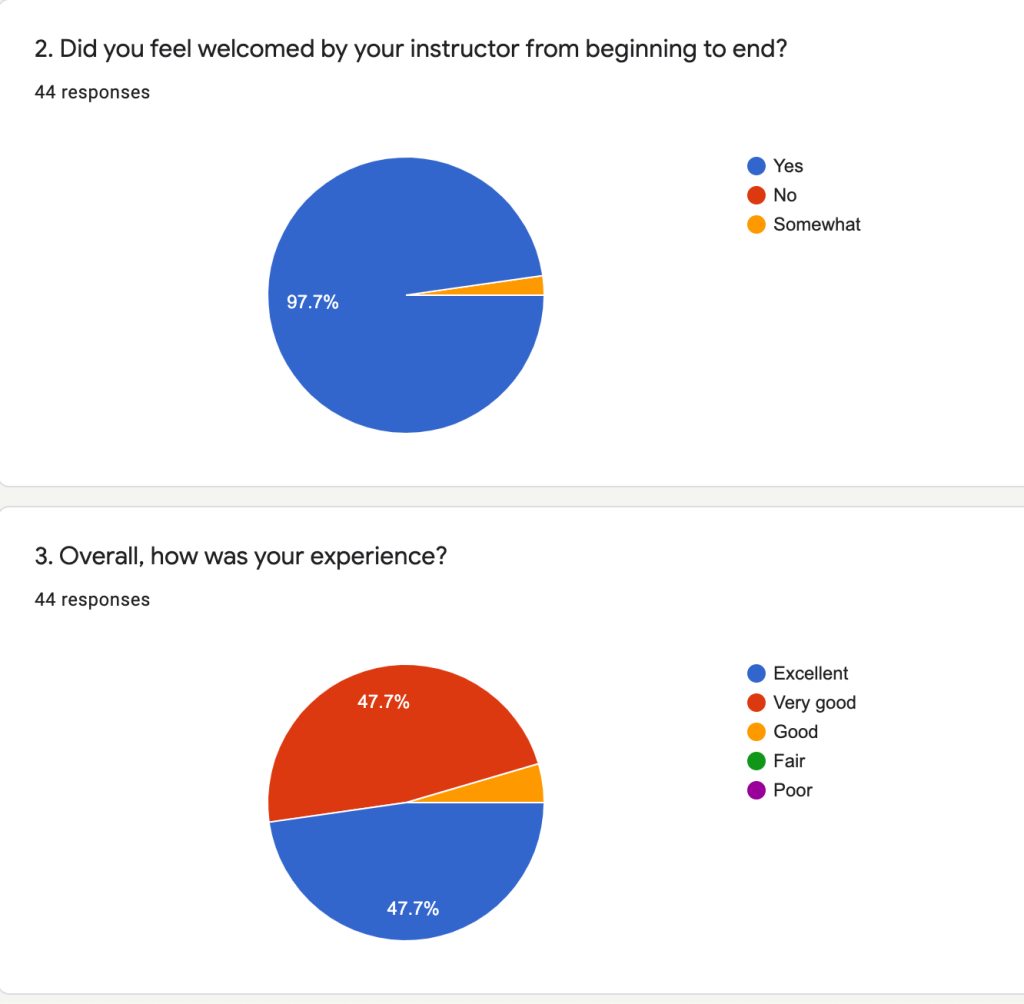
It is important to note that the negative commentary I received was significantly less than the positive feedback. That being said, we, as a species, are predisposed to focus on the negative as a means of survival. Thus these comments weigh heavier than their positive counterparts. Here is a snapshot of some general feedback given from 44 student feedback forms.
As you can see participants felt welcomed and generally derived significant enjoyment from their session.
As the weeks went on I started to use the negative feedback as a focus in my meditation practice. Allowing the sensations to come, peak, crash and then recede like the tide kissing the shore. I started to focus more on how these critiques triggered me and how, if left unacknowledged, could easily lead into further stories of being “not good enough” or to stop teaching altogether. When I allowed myself to truly feel into the experience the words slowly stopped triggering me. Although still not comfortable to receive, I was no longer taking the feedback as a personal attack. It was at this point that I was able to actually work on incorporating said feedback into my teaching in a meaningful way.
I noticed that, as I made this shift personally, my students began to mention how helpful my cues were or how the intention I chose and wove through the class really resonated with them. I received comments on how my guidance was timed right for students to make the proper adjustments. Or how they appreciated the modifications offered.
I believe that the feedback I received was a gift twice over; initially, receiving it and allowing it to land, wether positive or negative, and allowing it to guide further instruction, and secondarily, recognizing the space it afforded my students to feel seen, heard and to offer them a sense of belonging knowing that their concerns have been listened to and I have tried to make adjustments as appropriate to best suit their needs.
I did have some feedback that still said that balance was difficult and that some poses were simply too hard for their aging bodies. This is something I am continuing to work on. I do offer several modifications for balancing poses but could work on incorporating the concept of Drishti more throughout the practice. Similarly, there are many variations I could cue involving chairs or other props to help with issues such as arthritis. This will be an area of on-going learning for myself to ensure I can best meet the needs of my students in all stages of the lifecycle.
It is so important to recognize that while teaching a group yoga class it is impossible to get to the complexities of every individual student’s needs and meet them 100% of the way. However, it is crucial that every student feels welcome, encouraged, and empowered to make the poses their own. As a teacher, my goal is to ensure the class is accessible to every single person in such a way that they feel physically, mentally and emotionally safe.
I believe that I have been successful in creating an accessible yoga offering for the staff of ASYR and hope to offer other free services to other important community agencies in future.
At the end of this experience I’m left with the question of why do I take the small doses of negative feedback so personally? Why is so much of my focus taken up by this when, as seen above, my students are generally quite pleased with my offering? Where else in my life does this behaviour show up? What other areas of my life may be affected by this internalized negative self-narrative? Why do I react so intensely to the positive feedback and why do those feelings pale so quickly beside their negative counterparts? The journey to finding the answers to these questions will certainly be a long one, but I anticipate that it will be well worth the ride.
This project has been an absolute pleasure to complete. Although the requirement was only to teach one class a week for a month I am very happy that I extended it further. I still do not feel ready to charge for my teaching at this time but as I finish up my projects I hope to move into owning my role as a 500 hour certified yoga teacher.
It is my sincere hope that throughout my career as a yoga instructor my students always feel that they belong in my class.
I DID IT! An entire month vegan (with a few minor exceptions).
Honestly, I really enjoy eating this way. My digestive system is functioning far better than ever before and I am finding I don’t swell/ retain water the way I used to now that I have full control over my sodium intake.
I never thought I would make it an entire month if I’m being fully honest. I love cheese and certain meats when cooked. But I realized I do not miss cooking meat and I feel far better eating plant-based “cheese” versus the original stuff.
I would like to continue eating primarily vegan. It’s a savings on my bank account as well as on the planet and it’s improved my mental health even! That being said, I do believe that my protein intake might be suffering a bit so if you have any recommendations I’m all ears!
So, what exactly have I been eating since we last spoke?
No recipe here
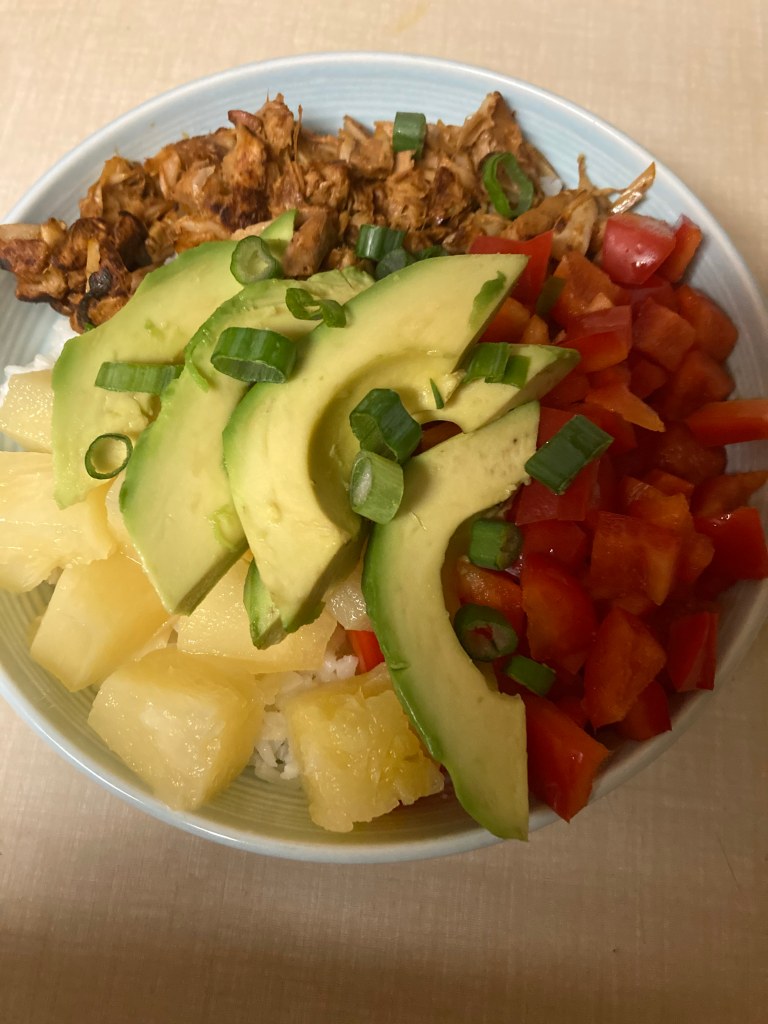
Just seasoned jackfruit with chopped up red peppers, pineapple chunks, and sliced avocado on a bed of rice and garnished with green onion. Simple weeknight meal. Apparently jackfruit is supposed to be one of the most sustainable meat alternatives. If you want to learn a little more on the topic, check out episode 3 of Down to Earth on Netflix.
These were delicious and I would highly recommend for a simple and filling meal
Portobello Mushroom Pizzas
No recipe, I just took portobello mushroom caps and added peppers, tomatoes, tofu and vegan ‘cheese’ then baked them in the oven. I’ve always loved making the non-vegan version of these. I wasn’t a huge fan of the tofu on this but I’m sure if I seasoned it properly I’d like it more.
Maca-Banana Shake
This recipe is from the book Find your true fork by Jeff Krasno (https://www.amazon.ca/Wanderlust-Find-Your-True-Fork/dp/1623369657/ref=sr_1_1?dchild=1&keywords=find+your+true+fork&qid=1612551865&sr=8-1) as always I’d encourage you look for this title at your local ma&pa book shop. I honestly have loved this recipe for years now. Not only is it vegan, it’s also raw. I’ve added Vega Protein Powder with Greens and hemp hearts to the recipe to make it even more nutritious. This is my go-to breakfast with a slice of toast with peanut butter or some form of fruit. It’s so delicious even Buddha Baby N1 is all over it in the morning and must have his own cup.
This is so easy to make and it was hearty and delicious! I will definitely be making it again in future. It almost has the taste of chilli. I will say it doesn’t look super appetizing but I promise it tastes great.
I’ve made these a few times and my goodness I love it. So easy. So yummy. Would make for easy meal prep for work. I do want to look up a home-made sweet chilli sauce recipe though for next time.
Naan Bread Pizza
No recipe here. I will admit this was not a fully vegan meal as the Naan bread did have buttermilk in it. But otherwise this was made with BBQ sauce, peppers, tomatoes, BBQ jackfruit, and Monterey jack style ‘cheese’.
I made another version of these this month with tomato paste cheddar style ‘cheese’ and vegan ‘pepperoni’. It was equally as delicious and definitely served my pizza craving.
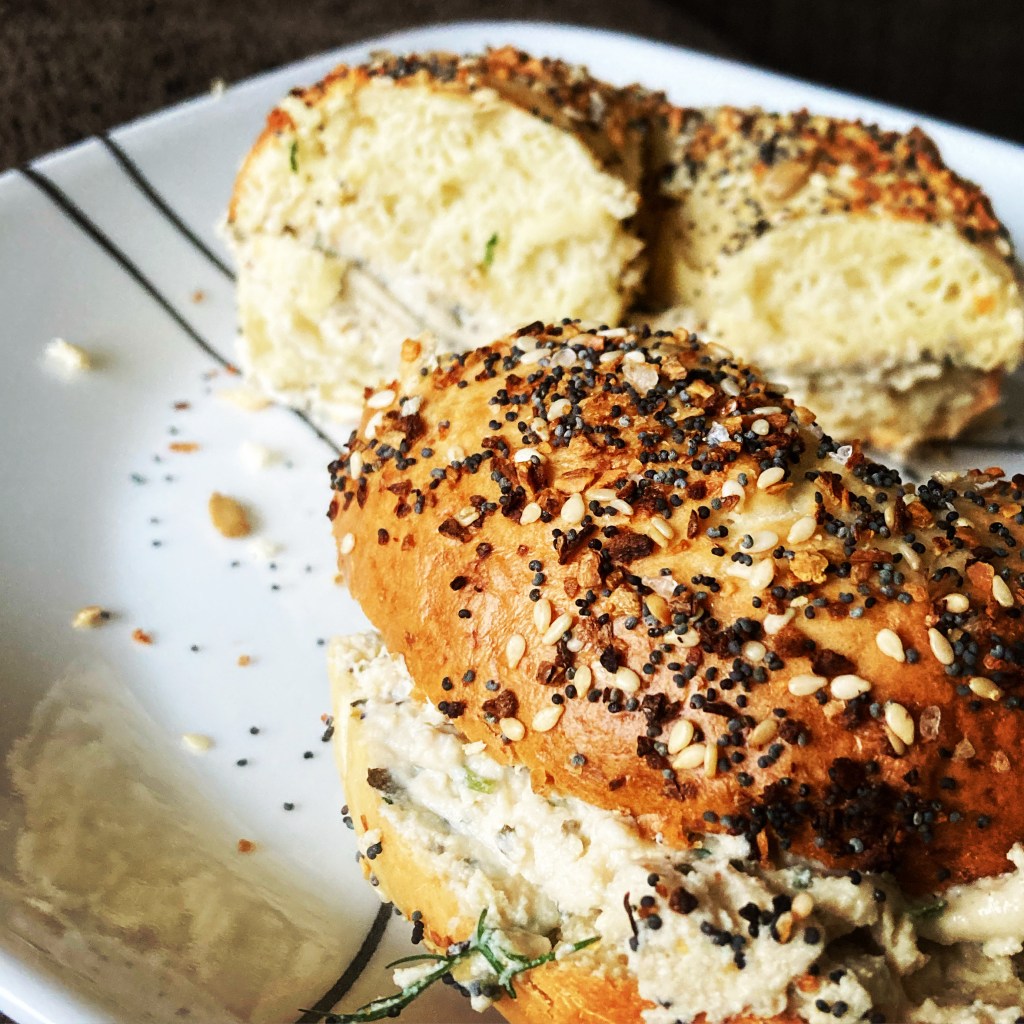
This might be the food I’m most proud of making this past month. I had never made any form of bread product from scratch and it was incredible. I will not be going back to purchasing store bought bagels. I will say the tofu cream cheese is not for me. I did eat it a few times and it’s not terrible by any means but I’ll stick to the store bought vegan alternatives for cream cheese versus making my own in future.
‘nough said…
It’s called so delicious for a reason and my PMS cravings were very pleased with this product.
Vegan Coconut Sweet Potato Cury with Sweet Potato Noodles
I did make some substitutions in this recipe, I bought spiralized butternut squash so substituted that for the sweet potato noodles. I also had cauliflower on hand and not broccoli so I made that substitution as well.
This was one of my favourite meals. It was so delicious and I love knowing all the ingredients in my food.
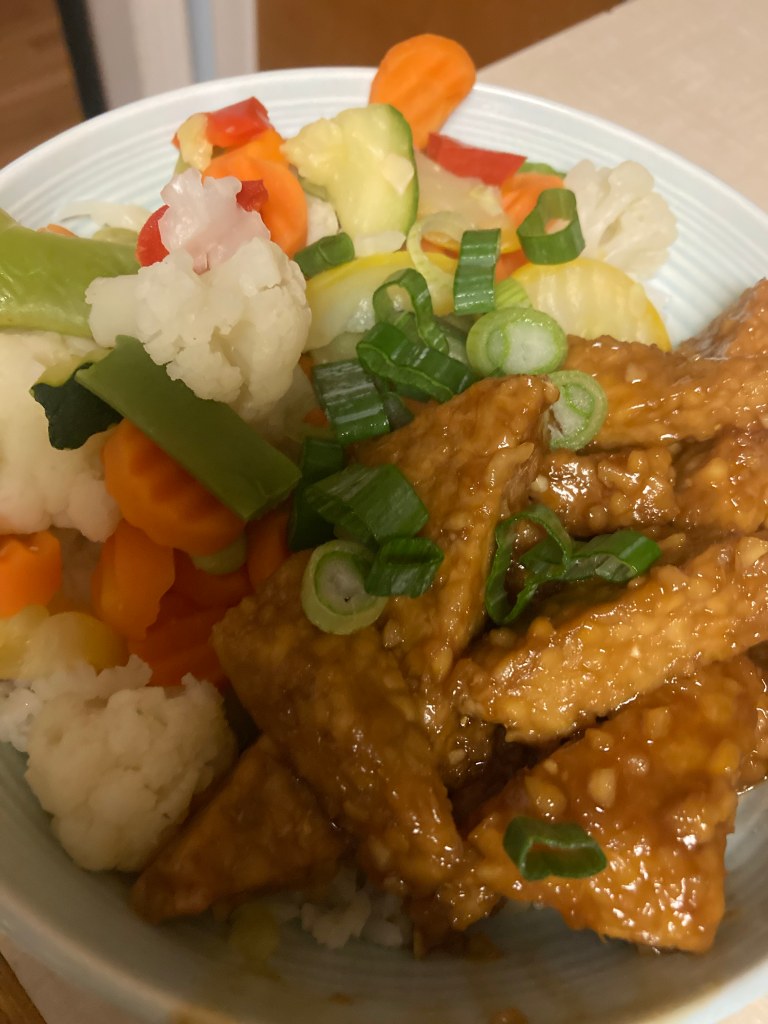
Sweet chili stir fry
No recipe here. Just a simple whipped together meal. I definitely got into a bit of a lazy streak this month. Can you tell? haha
Part 1 of 2
Vegan takeout.
OH. MY. GOD.
Seriously, you wouldn’t even know this poutine was vegan and as a Canadian I am all about poutine. This is clearly far from healthy but it was my treat to myself for eating home-cooked meals all month long.
Part 2 of 2
Alright, so the poutine was amazing but these cauliflower wings…. SPEECHLESS!
A long-time friend of mine recommended this restaurant for the best cauliflower wings in the region and they did not disappoint.
If you want to snag some of this absolute deliciousness head over to The Vegan Hippie Chick (www.theveganhippiechick.com)
I will definitely be going back in future and cannot wait until COVID-19 is a thing of the past and I can actually eat in restaurant because it looks so nice in there and sharing a meal with a friend always amplifies the experience.
Vegan Nachos
No recipe but was craving comfort so I made a tofu crumble with chili powder seasoning, then cut up peppers, and spread that on top of tostitos chips, added vegan cheese and some thai red peppers.
*Warning: Thai red peppers are really spicy. To the point where it is ill-advised to touch your eye even after washing your hands twice and waiting like a half hour after handling them. Or, y’know, you can learn the hard way like me. No judgment.
Sweet Potato Lasagna
This was a great recipe. It is filling and delicious but doesn’t give you that heavy feeling in your stomach like after eating traditional lasagna. This picture is from before I baked it because it smelled so good that I forgot to take an ‘after’ photo.
If you make it let me know your opinion. Buddha Baby N1 really enjoyed this recipe as well!
So there you have it… my month of committing to “Be Green”. I’m so grateful for your recommendations and will continue to seek additional recipes or tips.
I am definitely glad that I made this commitment to myself. I do not plan on remaining fully vegan but I do think I will maintain a fairly vegan diet. A big thing that this commitment has forced me to do is to cook from scratch far more often than I had gotten in the habit of doing. It stopped me from mindlessly grabbing food from the cupboard. I do hope to continue on with this habit of preparing my meals from scratch. Although I don’t adore meal planning and it is a lot of work, the effort is definitely worth the rewards of better functioning digestive tract and better sleep.
The Goal is to take a closer look at what you consume and how we, as a society, treat our planet. Use this project to commit to making a sustainable difference in your environment.
So I’ve decided to go vegan for the month of January. I wanted to reduce my consumption of meat and animal products for a few reasons. First, since my pregnancy with buddha baby N1 I have had a huge aversion to handling meat. I hate it’s smell, handling it, cooking it. Even eating it at times grosses me out. It’s like when I got pregnant all of a sudden my brain made the connection that I was eating muscle and flesh from another animal and since then I haven’t been a huge fan. Now don’t get me wrong, I do still like some things, especially salmon. I just am not so in love with meat that I can’t fathom living without it. Second, I have never been great with dairy. And by not great I mean I was hospitalized after my first birthday because I was choking on my own phlegm. So there’s that. Third, I really don’t like the thought of the entire animal product industry. It makes my stomach churn knowing what they do to those poor animals. I plan on watching the feature “Forks over Knives” to learn a little bit more.
That being said, I was slightly terrified by the thought of drastically changing my cooking habits. The whole meal planning thing has been a little bit overwhelming at times but so far I’ve actually been really enjoying this journey. Once I figured out what I was going to make for the first week and compiled my shopping list things got a lot easier. I’m actually excited to cook my dinners and see how it’s going to turn out. So far I have loved everything I’ve made. I will make the note that I have kept honey in my diet to put in my teas so I guess I’m like 99.5% vegan for the month of January.
Over my first week and a half of switching to vegan living, I have lost six pounds. Now this was not my intention of switching over, and I have a feeling it has a lot more to do with cooking all my food from scratch versus removing animal products. But I do think it’s important to document how the experience has been going so there it is. I’ve noticed I don’t ever get that super heavy awkward feeling in my stomach after eating and I feel satisfied without ever feeling stuffed. It’s like my stomach feels lighter so that’s kind of cool. I’ve also noticed my mood has improved. I’m happy and wanting to do things more and more often.
Here’s a highlight reel of the main meals I’ve made so far and a super brief review. Apologies for my lack of photography skills.
Epicure’s African Sweet Potato Stew
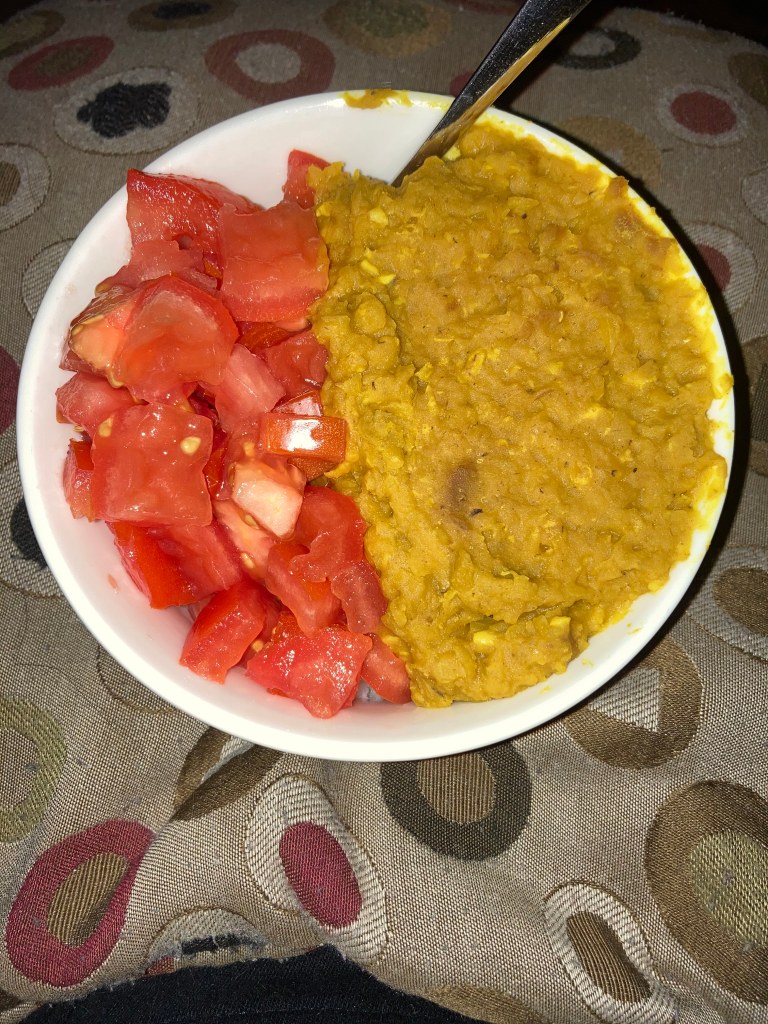
This stew is so delicious. You need the Epicure seasoning pack which you can purchase from their website. It is very filling and perfect for a cold winter evening. It was my second time making this recipe but first time subbing beans for meat. Still definitely delicious.
I’ve been making this recipe since Buddha Baby N1 was old enough to eat and I love it. Super simple and quick but filling. A side salad is definitely a smart idea in order to up the veggie intake. This recipe uses all staples that are already in the pantry so it’s great in a pinch.
I don’t think I have ever had tempeh before but oh my goodness I could have eaten the entire brick in one sitting because it tasted that good! It was my first time cooking with toasted sesame oil and it was delicious. I will absolutely be making this recipe again. I have been using rice as my base but I think quinoa would probably be amazing with this recipe instead.
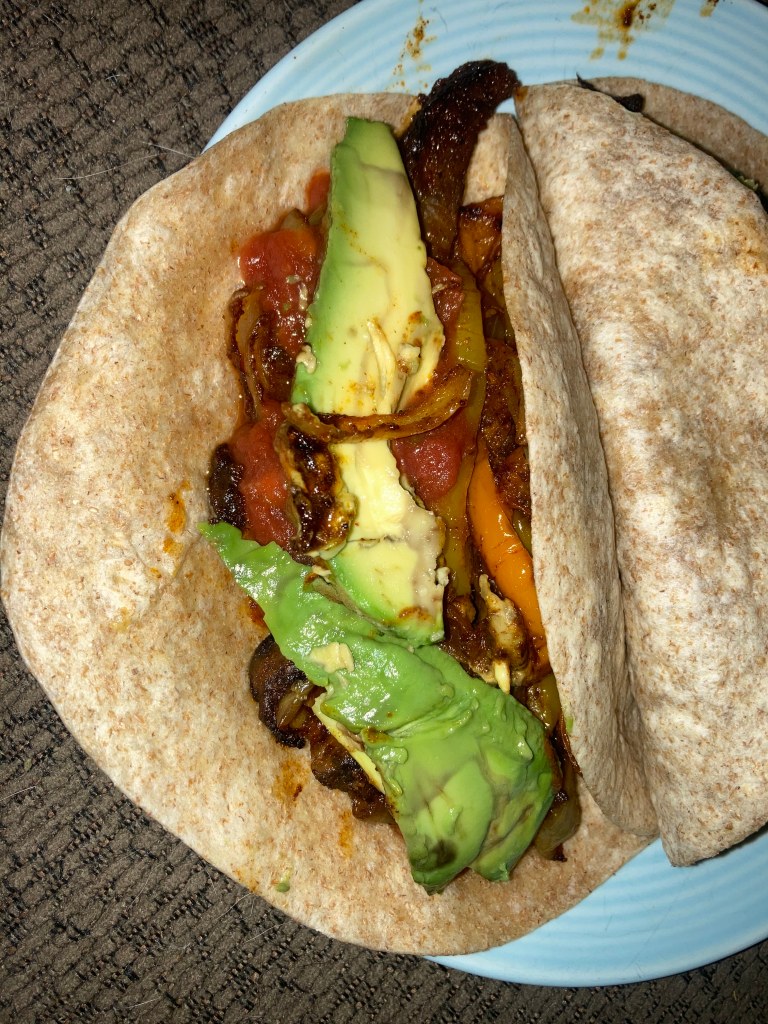
It was also phenomenal. I really love being able to shove things in the oven to cook so I am free to do other things in the mean time. Sometimes that’s cleaning the kitchen and doing the dishes and other times is playing with or caring for my kids. Either way, it’s nice to have that time when I’m not stuck cooking.This was a crowd favourite. Buddha baby N1 crushed half a fajita by himself and kept saying “Mmm. Good job mommy” so I’ll count that as a major win. I would say that I suck at portion control so this is a recipe I will also make a side salad for in future.
This took me like two hours to make because I’m the slowest person ever. I am definitely going to make some patties to freeze so that it takes significantly less time in future but oh my goodness it was PHENOMENAL. Like holy yum. II will say that the patties were muck when I went to put them in the oven but they crisped up so nicely and had a perfect crust to them. You could totally buy pre-made patties but these really aren’t hard to make.
Sweet Potato and Edamame Shepherd’s Pie
This recipe was also from my Big Vegan cook book. It looks terrible but tastes AMAZING! This was the first time I’ve ever used miso to cook with and it is so great. I also found as I was cooking the veggies to get them ready before baking everything I couldn’t help but think holy shit this smells like a million bucks. I’m wondering if this might be a recipe that I could prepare ahead of time and freeze and then cook from frozen in the oven.
It’s perfect for a quick work-night meal. You can have most of the ingredients on hand all the time to make this one of those I forgot to plan food and I only have 20 minutes to get a meal on the table. It was also delicious and I kind of felt like I was eating Chinese take out so that was pretty cool.
Those recipes have taken me from January 1st until today, the 10th. That’s pretty great. As I mentioned, I’ve loved everything I’ve tried so far.
If you have any suggestions for other amazing Vegan recipes I’m all ears!!! And if you try out any of these recipes let me know, I’d love to hear your experience.
Modo’s “Be Peace” pillar is to offer our practice to the benefit of all beings everywhere.
In this project the goal is to slow down, explore your internal landscape, notice your breath, practice settling into stillness. The prompt was to choose a topic that allows you to explore a side of peacefulness you haven’t experienced yet.
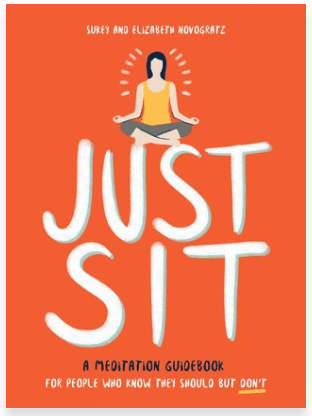
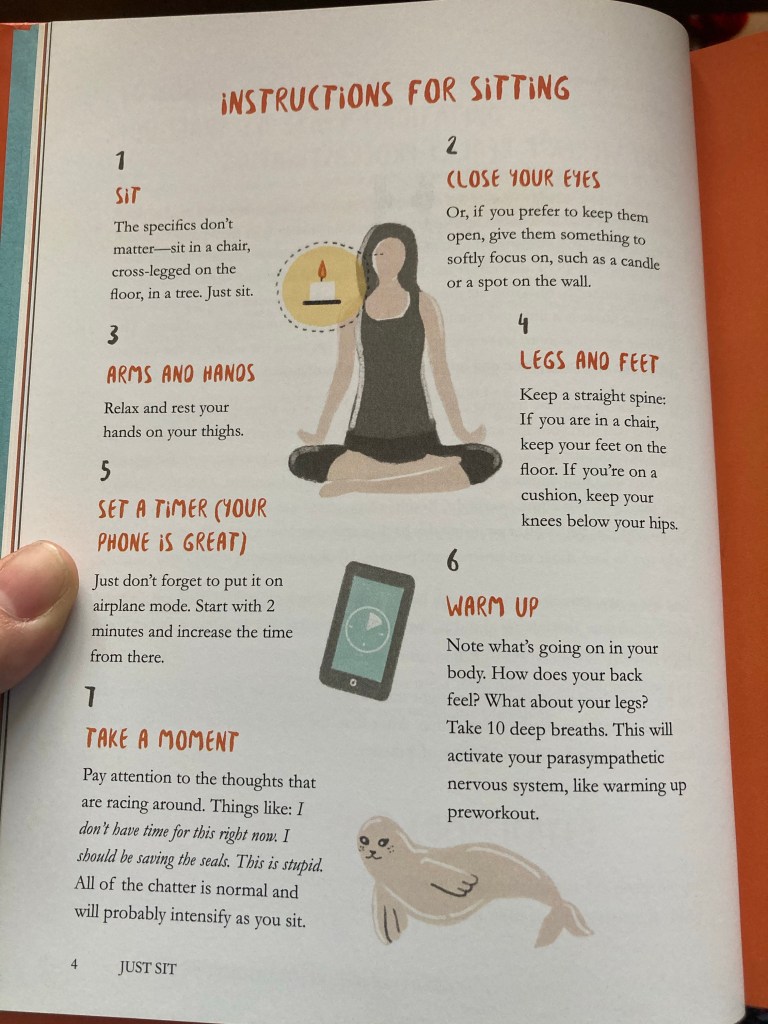
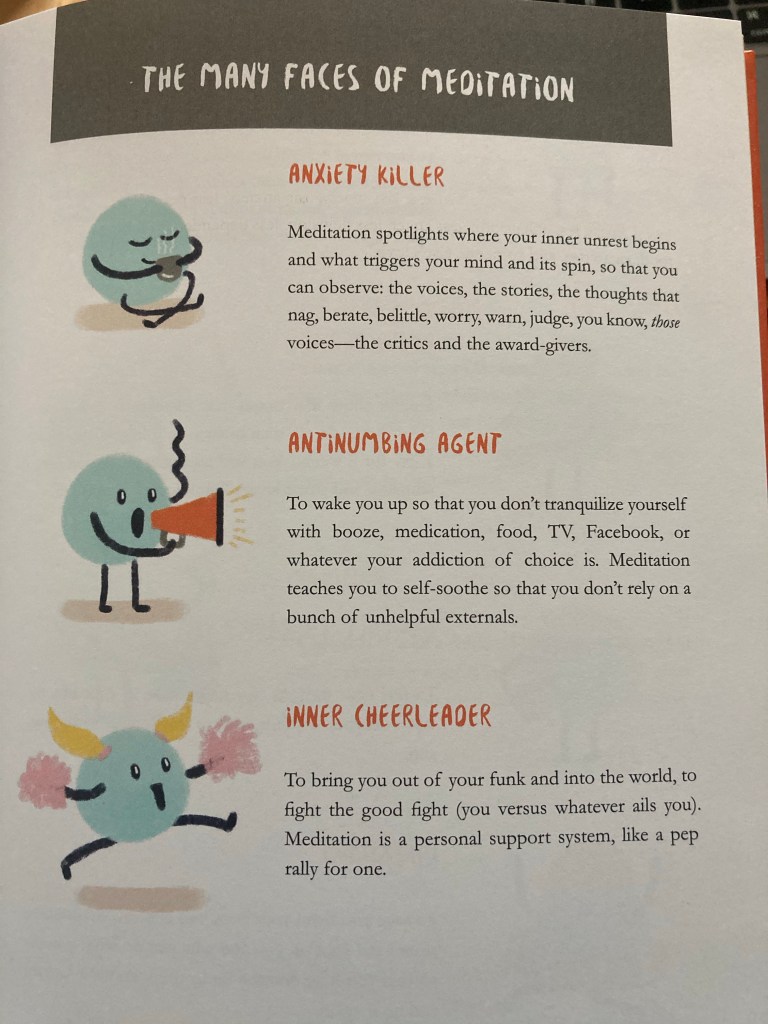
I chose to begin a daily meditation practice. I began with 3 minutes a day on December 1st and have slowly been increasing by one minute per week for the month. To nourish this practice I read the book Just Sit: A meditation guide for people who know they should but don’t by Sukey & Elizabeth Novogratz.
I would 10/10 recommend this book for anyone looking to start a meditation practice but who isn’t sure where to start. Here are some excerpts from the book that I found super useful myself. I hope it helps you get on your ass too.
I've noticed a huge shift in my ability to fall asleep thanks to my consistent meditation practice. I no longer need to take melatonin or watch videos/tv in order to get some shut eye. I've also noticed that I take a pause to breathe now before responding in uncomfortable situations. It's interesting because I honestly feel like each time I sit I can't concentrate and my mind is racing with a million thoughts and yet once my timer goes off I feel so much calmer. It's incredible what a few minutes of purposeful sitting/breathing can do. If you haven't already, go look up the Vagus Nerve, you'll understand why meditation is so functional in settling the body and mind.
There is no right or wrong way to meditate so really what’s your excuse? You sit multiple times a day in order to commute to work, to watch TV, to scroll your phone, etc. It’s really not that hard. I think Thich Nhat Hanh puts it nicely when he says “I have the impression that many of us are afraid of silence. We’re always taking in something- text, music, radio, television, or thoughts- to occupy the space. If quiet and space are so important for our happiness, why don’t we make more room for them in our lives?”
So for all of 2021 my resolution is to #committosit2021. If you would like to join me in the month of January, I am following along with free meditations from Love My Mat, you can sign up here –> https://view.flodesk.com/pages/5fecaff43a5df17f2467f732
With my life feeling a lot like a rollercoaster lately, I wasn’t expecting to find such an amazing anchor in meditation. I am so appreciative to have taken on this project and look forward to continuing on for the entire year. I can honestly say that my practice has allowed me to truly feel my emotions which is something I was attempting to avoid for a long time. I now appreciate the times when I feel happy or love or typically ‘positive’ feelings without clinging to them and I ride the wave when I experience sadness, anger, heartbreak and pain and recognize that they aren’t ‘negative’ emotions and they will pass within 90 seconds if I let myself feel them instead of trying to mentally combat them with thoughts about how awful they are… It’s been so interesting learning that my ears get tingly when I’m really upset and nervous about something. Knowing my body’s physical signs of each emotion is also ultimately helping me clue in faster to when I need to give myself a break before I reach a breaking point where I need tons of time to decompress and recharge. Sometimes a couple deep breaths is all I need to ground and recenter myself. What a beautifully powerful tool we have at our fingertips!
Somehow Buddha baby N1 is just over 2.5 years old and our family has welcomed Buddha baby N2 approximately six months ago in the middle of a pandemic.
I’d like to sit here and tell you that over the past year and a half I have followed my passion and gone back to career number 1, but that would be a big fat lie. I did however switch positions in career number 2 and although it did not magically make me adore my job it did significantly diminish the amount of disrespect I deal with so that’s a positive. When debating making the switch in my career versus totally readjusting course, the political climate totally changed and jobs in both career fields got a little hairy. I decided it was best to keep the job security at least until after expanding our family.
So… I stuck it out which is convenient because about a week into my new position, I conceived Buddha baby N2. If I had jumped ship there’s no guarantee that I would have worked enough hours to qualify for maternity leave. I’m very grateful to have health coverage and a guaranteed job to go back to at the end of my leave. I know that employment security is very unstable at this point in time #thanksCOVID, so I am not taking it for granted.
Life has continued to ebb and flow and believe me the lows have outweighed the highs in a lot of respects. Asides from the fact that 2020 threw a pandemic my way, I also had a post VBAC haemorrhage requiring a couple blood transfusions for a total of 2L of blood just to buy me the time to get to the IR for an arterial embolization [it’s a really cool procedure if you’re interested in learning more]. That was a super wakeup call for me. I realized that if I keep putting off things that I want to do, I might not get the opportunity to do it. So I finally decided to look into Modo Yoga Teacher Training. The great news is thanks to the pandemic teacher training shifted online. This meant it was finally accessible to this mama of young babes.
So in October 2020 I hopped onto Zoom to meet my sangha and begin my next journey. I have to say that it was amazing and transformative and probably deserves it’s own post. What I will mention here is that I finally felt like I was coming home to myself and who I am at my core. If you’re a parent, you know that it’s so easy to lose your sense of self once you have kids. It’s not intentional. One morning you just wake up and go “where the fuck is Tiffany?” And you literally don’t know where your pre-baby self went or how to even tap back into that former version of yourself. Now, this isn’t entirely bad, growth is good. Being a mama is delightful. But y’know being a complete human on your own is pretty rad too.
I’m now 300 hour Hatha yoga certified. Woot woot! And am completing a slew of projects to get my remaining 200 hours for a combined 500 hour certification. I am beyond excited to finally get to share my practice with all of you lovely souls.
As 2020 comes to a close, and I work towards continuing to build upon my health in 2021, I welcome you to walk alongside me as I learn more about the healing properties of this beautiful practice.
So that’s where I’ve been. And my goal is to be a wee bit more consistent from now on… but clearly that isn’t a strong suit of mine so please give me grace (and occasionally a swift kick in the ass).
Oh and for anyone wondering, Buddha baby N2 is also a boy, and he is honestly zen goals. I am so grateful to have two healthy and happy Buddha babies.
And just like that Buddha Baby is 13 months old, I am back at work and squarely back to struggling with transition.
There are many different types of people in the world, one of those being those people who transition very easily and adapt well to change. This is where you need to realize that I am not that type of person. I’m the “attempt to plan every detail and set up a solid foundation that I can ground myself on and then go through the motions” type of person. Clearly that is not realistic and so I tend to create un-necessary mental turmoil for myself.
If you are one of the first types.. I’m here. I’m listening… please impart your wisdom on me!
If you fit more so into my type… I’m here. Commiserate with me!
Let’s back things up a bit. I had mixed emotions to going back to work. I was heading back to a job that I took a voluntary year long unpaid leave from starting just before I conceived Buddha Baby. I knew it was a job that had severely impacted my mental health prior to taking this leave. And yet something in me said that I needed to give it another shot to see if now that I was different and some staff was different if things would have changed for the better. Spoiler alert: it still sucks. But before I re-entered this position I honestly believed that I would do better. That magically I would be able to handle the constant disrespect easier because I had somehow developed this newfound patience and understanding. Nope that patience and understanding seems to be reserved for Buddha Baby, namely when he’s teething, or when he’s all congested from daycare- look at how well he shares!
The scary thing is that the disrespect that is part of my day to day at work is universally experienced in people with the same role as me. I meet individuals 25 years into their careers who are still dealing with the same issues. And it is by far the biggest roadblock in my career. It makes me question is this really worth it? Am I really helping anyone?
Now this may be one of those areas where I could overlook the disrespect if this was my life’s burning passion and I couldn’t live without it. But two weeks into my degree (my third and final degree for now) I was ready to call it quits and throw in the towel. I had never been so unhappy with where I was at and I knew in all of my being this wasn’t right for me- I was having to sacrifice my mental and physical health and none of the work came easily to me.
I should mention that my first two university degrees were no walk in the park. I had to put in a lot of blood, sweat and tears. But on average the work came easily to me. I understood the concepts I could link them both within the field and cross divisions. Did I have a mental breakdown or two while getting through those years? Of course! But the difference is that, despite it being a lot of work and being difficult, it felt natural.
I somehow got roped into the “you should complete the degree,” “you’ll never regret having more education” ideologies. [Which happen to be complete and utter bullshit. If I can impart one pearl of wisdom on you it’s listen to your body’s screams over your social circle’s beliefs. After all, you’re the only one who has to live with your decisions]. And I continued on in my pursuit of career number two. After graduating I figured I would work some temporary or casual jobs in the field to see if I could do this and then make an informed decision from a place of understanding and wisdom. In reality, I got hired full-time permanent right away which is very rare and immediately stepped onto the hamster wheel feeling like it was my only opportunity to enter the field and not wanting to look a gift horse in the mouth or however that saying goes. Needless to say the road has been bumpy.
This transition back to my former roll was intended to be a trial period- work for 3 months, take 2 months to reflect and then assess where to go from there. And the whole, one foot in and one foot out thing is a very difficult act to nail. As someone who, admittedly, doesn’t handle transitions well, giving myself a ‘limbo’ period was kind of a stupid idea. I am now at an impass of: stay in current role until sometime in the undefined future when we will hopefully be able to give Buddha Baby a sibling, switch into a different role within the same career and hope for the best, or get the fuck out and start taking baby steps back towards career number one.
The past three days I have had this incredible inkling that I am not where I am supposed to be and that I need to go back to my first degree. Shift careers. Start over. Now in my early 20s the thought of switching careers and starting over didn’t scare me. Today, in my late 20s with a husband, a son and a mortgage the idea of the unknown is paralyzing.
I know that people give up their secure jobs everyday to pursue their dreams, and I admire those people. Heck, I even listen to Cathy Heller’s “Don’t Keep your Day Job” podcast every week. The thought of actually following through on that for myself is overwhelming: what if no one wants to hire me because I’ve been out of the field for so long? What if I can’t find a job closer to home and then I end up having to put Buddha Baby into daycare for longer days? And the list goes on and on… what if, what if, what if? Now Cathy would say these were my limiting beliefs because deep down I don’t think I am worthy. Ouch.
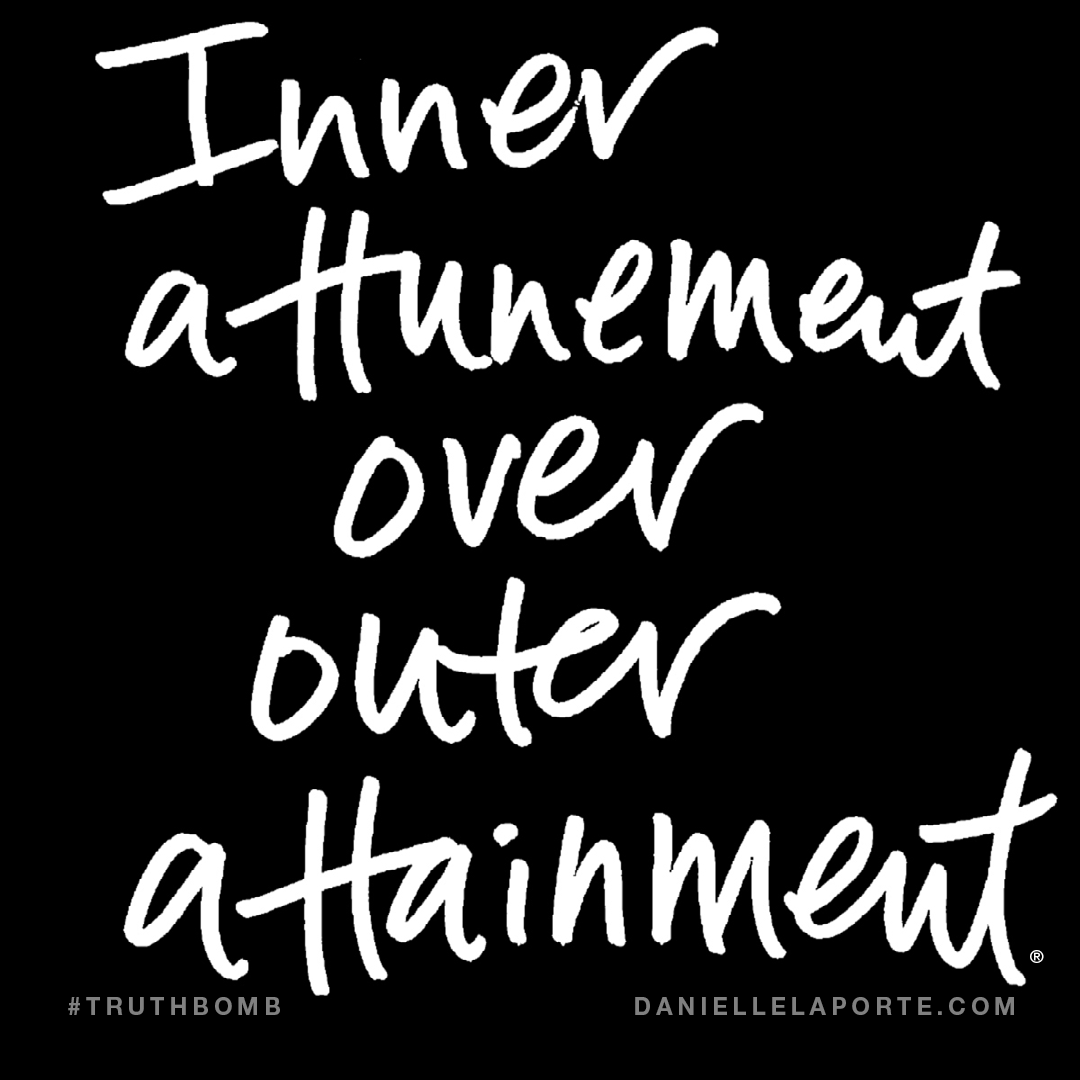
Yet I keep coming back to the thought: what am I doing all of this for? Does the pay really matter? And at the end of the day my heart’s answer is no. No it doesn’t. My mind immediately lands on Danielle LaPort’s #truthbomb : Inner attunement over outer attainment. I believe that relationships matter more. I believe that my own physical and mental wellbeing matters most.
And yet, I stumble and I falter and I hesitate. I stay stuck and miserable. This transition period has been frustrating but probably necessary for me to be able to finally let go a little bit and then a little bit more. And I will continue to let go piece by piece until I am able to fully transition to my first career and my first love. The career that my 16 year old self knew I needed.
Until then, I’m so glad you’re along for the ride!
Thanks for taking the time out of your day to hang out with me.

























 Yoga Mama Buddha Baby