
Modern yoga is constantly evolving. It is wonderful to witness growth and change, and it also brings up complex, multi-faceted issues for us to navigate as yoga teachers.
This month I decided to focus on trauma-informed yoga and I read the book “The Body Keeps the Score” by Dr. Bessel Van Der Kolk as part of my learning.
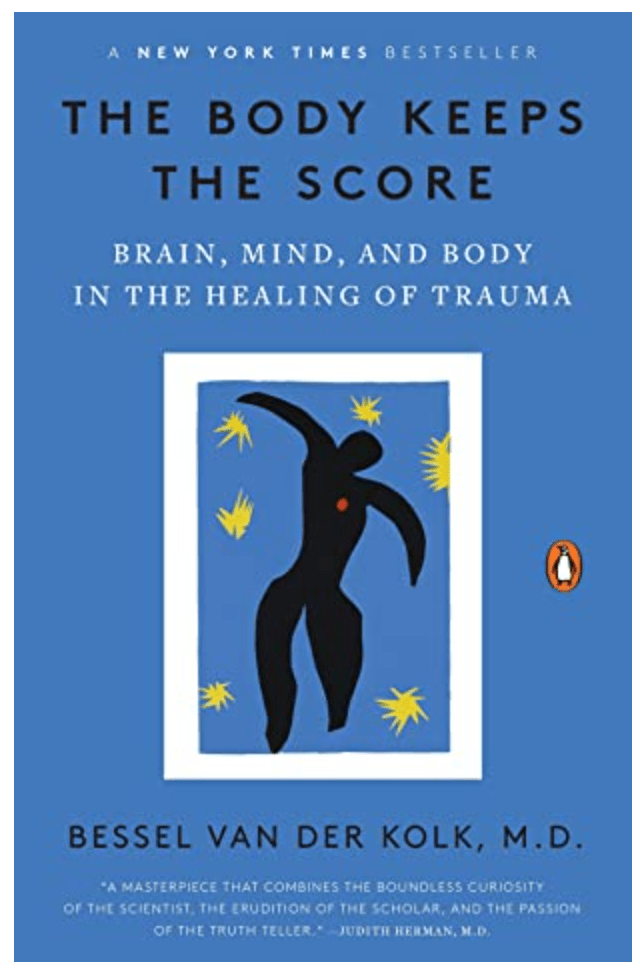
First off, wow. If you have never heard of this book, it is definitely a challenging read. I do feel that despite being a book about trauma it should really come with a trigger warning. Childhood sexual assault and other forms of abuse are depicted throughout sometimes in graphic detail. It is important to note that these anecdotes are relevant and necessary. Use discretion on whether or not you are ready to dive into this book. I personally needed to take breaks while reading. I found the parts on veterans to be okay and I read 100 pages in a couple of hours but when it started getting heavy into rape I needed to step back. I only read small chunks at a time and took an additional week to read the remaining 260 pages.
A huge take away for me is that we need to really honour where people are at in our classes. Being mindful to recognize that some people may be starting at a place where they cannot feel anything and thus could greatly benefit from body awareness and tuning into physical sensations as they come up in poses; whereas, other people might be hyper-aware of their body and may get easily hijaked by their sensations and emotions so it’s important to provide an anchor as well as safe alternatives (for instance ‘Happy baby’ pose can be really triggering for someone who was molested as the pelvis is quite open so maybe a simple reminder that closed leg child pose is always available). Being sensitive to each persons’ needs and reminding people to go at their own pace and to pay attention to where they are at today versus making students feel like they have to do exactly what you cue. Developing a sense of safety is vital. Many people with trauma histories may not feel safe anywhere, and so allowing them to discover the safety in their own body can have profound effects on their overall well-being.
The book explained how, for PTSD, yoga is often more effective at diminishing symptoms and increasing quality of life than medications. But throughout, Van der Kolk really focuses on “too much too fast” and how when you push too far too soon you wind up losing the person. It really sounds to me like each yoga practitioner should be trained in a trauma specific modality for yoga instruction as there is a significant need for trauma-informed practitioners.
I can see the implications this has on my elementary classroom as well as on my yoga students. Teaching people how to feel their emotions and learn how to respond rather than react, learn what it is that they need in that moment and how they are a safe person to deliver what they need to themselves is so incredibly powerful and transformative.
The studios I practice at either don’t use any touch or they use consent chips where you get to state whether or not you would like to have manual adjustments by your instructor. I believe that is one step in the right direction. I don’t believe that many yoga programs have enough focus on trauma specific practice. And, given the percentage of individuals in North America living with trauma histories, this seems grossly negligent.
Did your training program offer trauma sensitive instruction?
Does your studio adopt practices that are trauma-informed?
What are your thoughts on the yoga community’s role in furthering trauma or in healing trauma?

